

Fintech Regulations: What You Need to Know
Fintech regulations shape how financial technology companies provide payment services, banking products, and other financial services. The rules that apply depend on what a business does, where it operates, and how customer funds and data move through its systems.
There is no single global fintech rulebook. Understanding the relevant regulators and obligations early can help a company protect customers, avoid costly delays, and build services people can trust. This guide offers general information, not legal advice; confirm requirements with the appropriate regulator or qualified counsel.
Why fintech regulation matters
Fintech regulation helps protect consumers, support financial stability, and build trust in payments and banking services. It sets expectations for how firms handle money, explain products, manage risk, and safeguard customer information.
For customers, rules can provide safeguards around payment errors, complaints, clear fees, and the handling of personal data. For the wider financial system, requirements such as capital or safeguarding rules may help reduce the harm caused by a provider’s failure. The exact protections vary by jurisdiction and service.
Regulation also affects a fintech’s commercial choices. A licensing requirement may influence which countries a company can serve, how quickly it can launch, and whether it must hold customer funds separately. Compliance can require investment in people, systems, and independent review. Those costs are real, but they can also reduce operational and reputational risks.
Good compliance is therefore part of product design. A payment flow that clearly shows fees, confirms the recipient, and provides a route to report a problem can support both customer experience and regulatory expectations. The goal is to make required protections work in the service itself, rather than treating them as paperwork added after launch.
Who regulates fintech companies?
The regulators responsible for a fintech company depend on its activities and the jurisdictions where it operates. A payments provider, digital bank, lender, and data service may face different authorities, sometimes within the same country.
Financial regulators may supervise banking, payment services, e-money, consumer credit, or securities. Other public bodies may oversee data privacy, cybersecurity, competition, or consumer rights. Some countries divide these responsibilities among several agencies; others assign multiple functions to one authority.
Start by mapping each product to the activity it performs. Moving money, holding customer balances, issuing a payment instrument, offering a deposit account, and providing a technology platform to a licensed institution can lead to different regulatory questions. The label a company uses, such as “wallet” or “neobank,” does not determine its legal status.
Then identify the countries involved in the customer relationship and the transaction. Incorporation in one place does not necessarily settle which rules apply when customers, agents, or payment flows are elsewhere. For orientation, the U.S. Financial Crimes Enforcement Network explains its role in financial crime oversight, while businesses should check the authorities relevant to each market and activity.
Key regulatory requirements
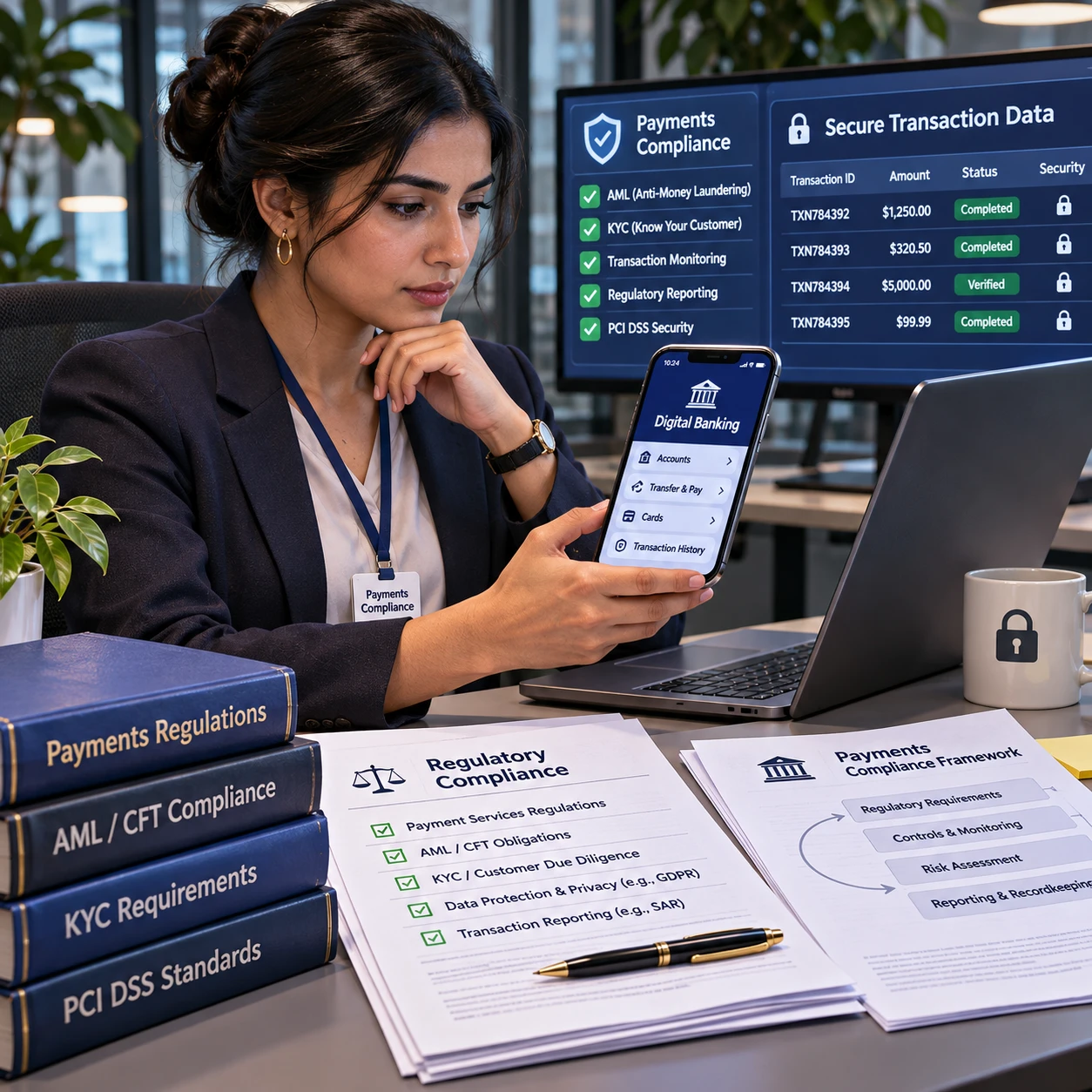
Key fintech requirements often include licensing or registration, anti-money laundering controls, customer verification, consumer protection, and data privacy and security. Which obligations apply, and how detailed they are, depends on the business model and location.
Licensing and registration
A company may need authorization before it provides a regulated service. Depending on the jurisdiction, this could mean a payment institution, money transmitter, e-money, banking, lending, or other license—or registration under a specific regime. Some firms operate as agents or technology providers for licensed partners, but that arrangement does not automatically remove all regulatory duties.
AML and KYC
Anti-money laundering (AML) measures are designed to detect and prevent the use of financial services for money laundering and related crimes. Know Your Customer (KYC) refers to identifying and assessing customers. Depending on applicable rules and risk, controls can include identity checks, beneficial-owner verification, transaction monitoring, recordkeeping, and reporting suspicious activity to the appropriate authority.
Customer checks need to be proportionate and maintained over time. A successful identity check at sign-up does not replace monitoring for unusual activity or updating information when risk changes.
Consumer protection and data safeguards
Consumer protection requirements may cover transparent pricing, fair marketing, complaint handling, disclosures, and procedures for unauthorized or mistaken payments. Data privacy and security rules can govern what personal information a fintech collects, why it uses it, how long it keeps it, and how it protects or shares it. Security duties may also include access controls, incident response, and third-party risk management.
These areas overlap but are not interchangeable: a secure system can still collect data without a valid basis, and a clear disclosure cannot compensate for weak account security.
How requirements differ by fintech business model
Fintech requirements differ because payment providers, digital banks, and other financial businesses perform different activities and take on different risks. A license or control that applies to one model should not be assumed to apply to another.
- Payment providers: May need authorization or registration to process payments, transfer money, issue stored value, or hold funds. Rules may address safeguarding, payment execution, disclosures, refunds, complaints, and AML controls.
- Digital banks: If a firm accepts deposits or provides regulated banking services, it may face banking authorization, governance, capital, liquidity, and prudential supervision requirements. A fintech app that connects customers to a partner bank is not necessarily itself a bank; responsibility depends on the legal structure and actual activities.
- Other financial service businesses: Lenders, brokers, and financial data services can face distinct rules for credit decisions, disclosures, customer consent, or access to information. A software provider that does not handle funds or make regulated decisions may have a different position, though privacy, security, and contractual duties can still apply.
When comparing models, ask three practical questions: Who holds the customer’s money? Who makes the regulated decision or executes the transaction? Which entity has the direct relationship with the customer? Answers help reveal where licensing, consumer protection, and operational responsibilities may sit, but they do not replace a legal assessment.
Practical steps for managing compliance
To manage fintech compliance, map your activities and markets, identify the rules and responsible entities, assign owners, and review controls whenever the business changes. This creates a working process instead of a one-time licensing exercise.
- Describe the service precisely. Document how money, data, and instructions move; who contracts with the customer; and which partners perform each function.
- Map jurisdictions and authorities. List where the company operates, where customers are located, and which regulators or data protection authorities may be relevant.
- Check permissions before launch. Confirm whether licensing, registration, an exemption, or a regulated partner arrangement applies. Record the basis for the decision and get qualified advice where the answer is uncertain.
- Assign accountable owners. Name people responsible for licensing, AML/KYC, consumer complaints, privacy, security, and partner oversight. Make escalation routes clear.
- Build controls into operations. Set procedures for identity checks, transaction monitoring, disclosures, access permissions, incident reporting, and record retention. Test whether staff can follow them in real customer cases.
- Review changes and evidence. Reassess when launching a product, entering a country, changing a partner, or altering how funds are held. Keep policies, approvals, training records, and test results organized.
A useful discipline is to keep a short compliance register linking each activity to its jurisdiction, regulator, permission, control owner, and next review date. It makes gaps easier to spot when a product or partnership changes.
Common compliance challenges
Fintech compliance is challenging because rules vary across borders, change over time, and must fit into customer journeys without weakening essential controls. Planning for these tensions is more effective than treating compliance as a final launch check.
Jurisdictional complexity
A product may serve customers in several markets through one app, but licensing and consumer protections can differ in each. Assuming that a home-country permission covers every market can lead to launch delays or enforcement risk. Maintain a country-by-country activity map and confirm cross-border permissions before accepting customers.
Evolving requirements and partner responsibilities
Rules, regulatory guidance, and supervisory expectations can change, while a fintech’s partners may update their own policies. A contract can allocate tasks, but it does not necessarily transfer statutory responsibility. Set a review schedule, monitor regulator communications, and agree how partners will share incidents, audit evidence, and rule changes.
Customer experience versus effective controls
Extra verification can create friction, but removing checks indiscriminately may increase fraud and regulatory exposure. Design controls around risk: use clear explanations, request information at the point it is needed, and provide a way to resolve verification failures. Measure both completion and control quality, so a smoother sign-up does not conceal weaker protection.
Frequently asked questions
There is no universal answer to common fintech compliance questions: the applicable rules turn on the activity, jurisdiction, and legal structure. These short answers are a starting point, not a substitute for checking local requirements.
Does every fintech company need a financial license?
No. Some fintech companies need a license or registration, while others may provide technology or support to a regulated firm without holding the same authorization. The actual service and local law determine the answer.
Which regulations apply to payment providers?
Payment providers may face rules covering authorization, payment execution, safeguarding, AML/KYC, customer disclosures, complaints, data privacy, and security. The relevant requirements vary by payment activity and country.
What do AML and KYC mean for fintech businesses?
AML means anti-money laundering: measures to prevent and detect financial crime. KYC means Know Your Customer: identifying and assessing customers. Together, applicable controls may include identity verification, ongoing monitoring, records, and escalation of suspicious activity.
Do fintech regulations differ by country?
Yes. Countries define regulated activities, licensing pathways, consumer protections, and data obligations differently. A fintech expanding internationally should assess each market before offering its services there.
For payments and banking businesses, the soundest starting point is a clear map of activities, customers, funds, data, and markets. Use that map to confirm obligations with the relevant regulators or qualified legal and compliance professionals, then revisit it as the service evolves.